Let’s be honest: daily commuting in the city has turned into a slow, expensive headache.
Between endless bumper-to-bumper traffic, skyrocketing gas prices, and the soul-crushing search for a parking spot, getting to work shouldn’t feel like a chore before your day even starts. For decades, owning a car was the default choice for daily transport. But as cities get more congested, a growing number of commuters are asking a very practical question: Can an electric bike actually replace a car for daily travel?
If you are looking to save money, skip the traffic gridlock, and get some fresh air without showing up to the office soaked in sweat, the answer is a resounding yes. Let’s break down how e-bikes stack up against traditional cars in terms of cost, convenience, and daily reality—and how to pick the right set of wheels for your routine.
The True Cost of Commuting: Cars vs. E-Bikes
When comparing a car to an e-bike, most people only look at the initial price tag. But the real difference shows up in your monthly bank statement.
1. Fuel and Charging
Filling up a gas tank can easily cost $50 to $80 a week, depending on your vehicle and commute distance. Charging an e-bike battery, on the other hand, costs pennies. Most commuters spend less than $20 a year on electricity to power their daily e-bike rides.
2. Parking and Hidden Fees
City parking passes can cost anywhere from $100 to $400 a month. Add in annual insurance, routine maintenance, registration fees, and unexpected repair bills, and owning a car turns into a major financial drain. With an electric bike, parking is virtually free, and maintenance costs are a fraction of car servicing.
3. Time Saved in Traffic
In congested urban centers, cars rarely move at their speed limits. An e-bike allows you to breeze past trapped traffic using dedicated bike lanes. Plus, you park right outside your destination—no circling the block for 20 minutes to find an open space.
Matching Your Commute: Choosing the Right Electric Bike
Not all commutes are the same. Some people need a quick option for short city bursts, while others need something robust for rougher pavement or long stretches. The key to replacing your car is choosing an e-bike that seamlessly fits your space and lifestyle.
Here are three practical setups based on popular daily travel scenarios:
The All-Terrain Commuter Who Wants Maximum Stability
If your route includes uneven pavement, gravel paths, or bumpy city streets, a standard skinny-tire bike won’t cut it. You need wide tires for extra traction and comfort.
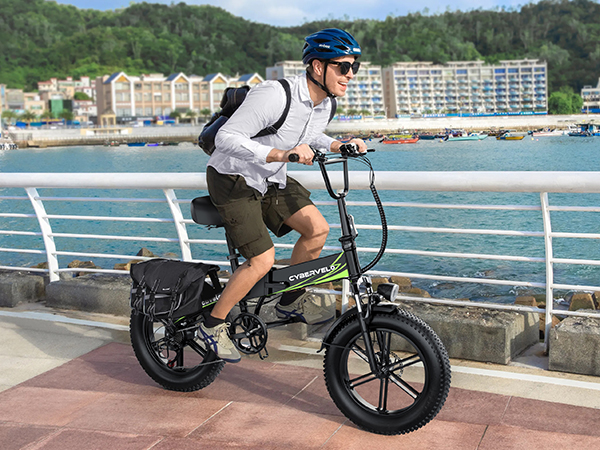
For riders dealing with unpredictable road conditions, the Cybervelo EK4 Folding Fat Tire Electric Bike offers the perfect blend of rugged durability and portability. Its fat tires absorb shocks easily, while the folding frame allows you to tuck it away in an apartment or under a office desk when you’re done riding.
The Urban Professional Needing Sleek Versatility
If you live in an apartment with limited storage or need to carry your bike up a flight of stairs, weight and convenience are top priorities. You want a clean, agile bike that handles tight city turns effortlessly.
A streamlined option like the Cybervelo EK5 Folding Electric Bike is built specifically for smooth city streets and compact storage. It folds down in seconds, making it ideal for multi-modal commuting—ride to the train station, fold it up for the train ride, and unfold it for the final mile to your office.
The Long-Distance Rider Looking for Full-Sized Comfort
Some commuters prefer the riding feel of a traditional, full-sized bicycle but still need the space-saving benefit of a foldable design for storage at home or in the office trunk.
That’s where a versatile model like the Cybervelo MARS700 Folding Electric Bike shines. It delivers a smooth, balanced ride suitable for longer daily routes, giving you the power and stability of a standard bike alongside the convenience of a foldable frame.
Frequently Asked Questions About E-Bike Commuting
What happens when it rains?
Modern e-bikes and their electrical components are water-resistant. Fenders and waterproof riding gear will keep you dry during light to moderate rain. For severe weather, combining your ride with public transit is a smart backup plan.
How do I keep my e-bike safe from theft?
Always use a high-quality heavy-duty U-lock or folding lock, and lock the frame to a secured rack. Because foldable models like the Cybervelo series can be taken indoors, you can often eliminate theft risk entirely by bringing your bike inside your workspace or apartment.
Should You Make the Switch?
You don’t necessarily have to sell your car tomorrow to reap the benefits of an e-bike. Many city dwellers start by replacing just two or three car trips a week with an electric bike.
You’ll quickly notice less stress, lower transportation costs, and a much more enjoyable start to your workday. If you’re ready to bypass traffic jams and reclaim your daily commute, switching to a reliable, space-saving foldable e-bike is one of the smartest upgrades you can make.
发表回复