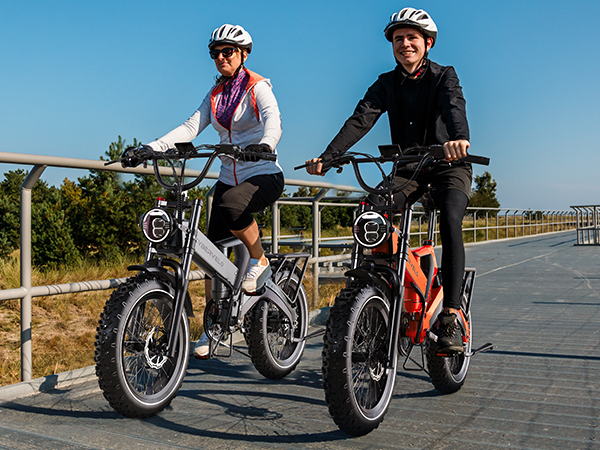
Riding an electric bike is all about freedom, but if you’ve ever skidded on loose gravel, felt every bump on a cobblestone street, or stuck your tires in soft sand, you know that standard bicycle tires have their limits. That is precisely why fat tire e-bikes have taken the cycling world by storm over the past few years.
By running lower air pressure and offering a massive contact patch with the ground, wide tires transform a rigid ride into a smooth, go-anywhere experience. But what exactly makes a fat tire tick, and how do you decide between popular sizes like 20-inch and 26-inch options? Let’s break it all down from a practical rider’s perspective.
What Is a Fat Tire Electric Bike?
Technically speaking, any standard e-bike tire with a width of 3.8 inches or more falls into the “fat tire” category. Most mainstream models utilize either 4.0-inch or 4.5-inch rubber.
Unlike narrow road tires that require high pressure (often 40 to 60 PSI) to prevent pinch flats, fat tires operate at much lower pressures—typically between 5 and 15 PSI. This low pressure allows the tire to squish and morph over obstacles rather than bounce off them. The result? Superior traction on sand, snow, mud, and unpaved trails, combined with natural shock absorption that takes the strain off your wrists and back.
20-Inch vs. 26-Inch Fat Tires: Key Differences for Buyers
When browsing fat tire e-bikes, you will notice two dominant rim diameters paired with 4.0-inch tires: 20-inch and 26-inch. While both offer impressive traction, they deliver fundamentally different riding characteristics.
1. 20×4.0 Inches: Compact, Agile, and Versatile
Smaller diameter wheels lower the bike’s overall center of gravity. This setup provides exceptional torque off the line, snappy handling in tight urban spaces, and a lower standover height that suits a wider range of rider heights. Furthermore, 20-inch fat tires are frequently paired with folding frames, making them ideal for RV campers, apartment dwellers, or commuters who need to store their bike indoors.
For instance, models like the Cybervelo EK6 Folding Electric Bike combine a punchy motor with 20*4.0 fat tires. This combination allows riders to navigate paved city streets during the week, fold the frame into a trunk, and tackle bumpy dirt trails on the weekend without sacrificing storage space or stability.
2. 26×4.0 Inches: Rollover Ability and Full-Sized Comfort
Larger 26-inch wheels are designed for cruising and high-speed stability. The larger diameter creates a gentler attack angle when rolling over roots, rocks, or potholes, giving you momentum over rough terrain. If you plan on long-distance trail riding, open beach cruising, or deep snow exploration, a 26×4.0 setup gives you that classic “monster truck” feeling on two wheels.
A prime example of this full-sized setup is the Cybervelo EK9 Electric Bike. Built around 26*4.0 fat tires, it excels at maintaining speed over uneven ground, smoothing out long-distance rides, and providing maximum surface area contact for heavy-duty outdoor adventures.
Practical Trade-Offs to Consider Before Buying
While fat tires offer incredible comfort and grip, they aren’t without compromise. Keep these factors in mind when choosing your ride:
- Weight: Fat tires, heavy-duty rims, and reinforced tubes add overall mass to the bike. Expect a fat tire e-bike to weigh noticeably more than a traditional commuter.
- Rolling Resistance: Wider tread patterns take slightly more energy to spin. You will rely a bit more on motor assistance compared to skinny-tire road bikes.
- Maintenance: Checking tire pressure regularly is crucial. A drop of just 2 or 3 PSI can noticeably change how the bike steers and handles turns.
Which Fat Tire Setup Fits Your Lifestyle?
If your primary goal is portability, quick acceleration, easy mounting, and versatility for both city streets and light trails, a compact 20×4.0 folding build is almost always the smarter pick.
If you prioritize long-range comfort, maximum obstacle rollover, and a full-frame riding posture for off-road trails, going with a 26×4.0 bike will give you the smooth ride you’re looking for.
Whichever size you select, switching to fat tires fundamentally changes where and when you can ride. Keep your tire pressures dialed for your local terrain, gear up, and enjoy the extra traction.
发表回复